
(function(w,d,s,l,i){w[l]=w[l]||[];w[l].push({'gtm.start': new Date().getTime(),event:'gtm.js'});var f=d.getElementsByTagName(s)[0], j=d.createElement(s),dl=l!='dataLayer'?'&l='+l:'';j.async=true;j.data-privacy-src= 'https://www.googletagmanager.com/gtm.js?id='+i+dl;f.parentNode.insertBefore(j,f); })(window,document,'script','dataLayer','GTM-5N8L3VKW');

The strength of cement is normally between 20 N/mm² and 50 N/mm² but the strength of high-performance concrete and reinforced concrete can amount 200N/mm² and more. The modulus of elasticity (Young´s modulus) of concrete is between 15,000 N/mm² and 45,000 N/mm² (depending on the hardened cement paste, the volume of the hardened cement paste, the used aggregates and the reinforcement).

Based on the brittleness of concrete the fracture strain is in a tenth percent range. These are – in relation to the specimen dimensions – deformations in a range of only a few hundredth of a millimeter; little more than a hairsbreadth. According to this Toni Technik testing systems are designed for deformation resistance and are equipped with high-sensitive and reproducible fracture detection.

For the standard quality control Toni Technik supplies single-purpose testing systems as well as customized solutions by the ToniNORM series, that is individually planned as per customer requirements.

Additionally we offer all-in-one solutions for the standard-compliant specimen preparation by the ToniSYSTEMLABORATORY, that are planned and realized according to the customer needs, also for already existing test laboratories.

You will profit from our experience of decades with highly diverse test requirements.

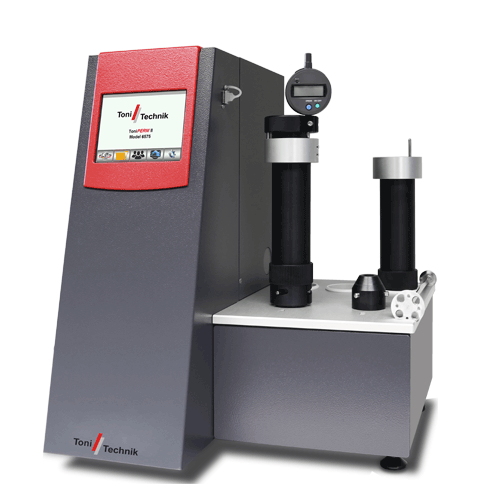
  • The air permeability tester ToniPERM II is designed for the determination of the specific surface of powders, especially suitable for the permanent control of manufacturing characteristics in the daily laboratory work. This measuring procedure serves as practice oriented alternative for the standard procedures according to EN 196 as well as ASTM C 204.

    Key benefits for the user:

    • Simple operation with reproducible results
      • Intuitive operation with touchscreen
      • Automatic volume correction
    • Automatic quadruple test of a double sample with a single operating effort
    • Robust, low-maintenance design*
    • Easy data export via LAN interface ** or USB stick

    * Ask about our extended warranty terms

    ** ToniLINK software required

  • Automatic, computer-controlled Vicat needle instrument providing six measuring stations for the determination of the setting characteristics of binding materials, preferably of:
    • Cement according to EN 196, ASTM C 191 and AS/NZS 2350
    • Gypsum according to EN 13279 and ASTM C 472
      Key benefits for the user:
    • Increased efficiency through parallel automatic determination of the setting behavior in conformity with standards
    • Robust low-maintenance execution with automatic cleaning of the penetrating needle
    • Fast tesing mode for rapid setting building materials
    • Easy data export via USB stick
    • Simple conversion to other product standards e.g. cement, mortar in less than one minute
  • The ToniSET Expert is a PC-controlled needle instrument according to Vicat and is designed for the standard-compliant determination of the setting characteristics of cement, gypsum and mortar according to: EN 196-3, EN 13279-2, EN 480-2, ASTM C191, ASTM C472 and ASTM C807   Key benefits for the user:
    • User-friendly, self-explaining testing software
    • Precise, standard-compliant positioning of the needle on the specimen surface
    • High-precision, electronic measurement of the penetration depth due to incremental measuring system (resolution 0.05 mm)
    • Low maintenance expenditure and high durability due to solid and high-quality design
    • Quick measurement mode with deactivatable cleaning function
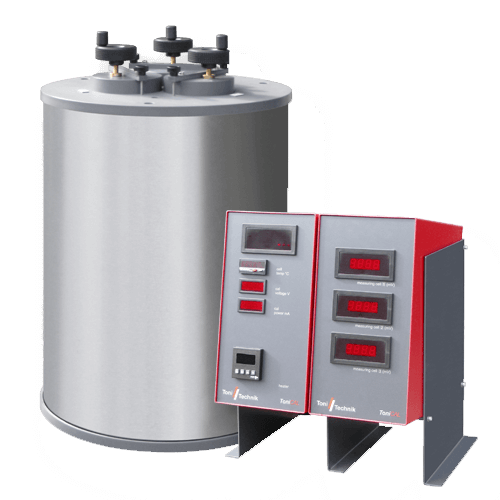
  • Computer controlled isothermal heat flow calorimeter for the continuous determination of the total evolved heat of hydration of binding materials, preferably of cement according to ASTM C1702. With online computer operation the instrument allows to directly determine the heat development rate (J/g) in dependence of the elapsed time. Object is the use for rational Quality Control as alternative methods for ASTM C186 and DIN EN 196-8.   Key benefits for the user: ✓ Rigid, durable measuring instrument for industrial and laboratory tasks ✓ Self-calibration function by operator ✓ Very high detection sensitivity by three switchable measuring ranges for different types of binding materials ✓ Test method with great informational value and with very good reproducibility ✓ Detection of the initial peak ✓ Difference in temperature between measuring cell and ambience ✓ Extension for testing additives by adapting an after-injection module with homogenization function ✓ Evaluation of the results via computer with numerical and/or graphical output
  • Computer controlled isothermal heat flow calorimeter with six measuring cells for the continuous determination of the total evolved heat of hydration of binding materials, preferably of cement according to ASTM C1702.   Key benefits for the user:
    • parallel, independent, time-shifted operation of the six measuring cells in all operating states such as: self-calibration, zero effect determination and measuring
    • high measuring sensitivity due to three switchable measuring ranges for different binders
    • possibility of re-injection of additives including homogenization
    • evaluation of results by means of a PC with numerical and/or graphic output
  • Computer controlled isothermal heat flow calorimeter with three measuring cells for the continuous determination of the total evolved heat of hydration of binding materials, preferably cement according to ASTM C1702.   Key benefits for the user: ✓ Detection of the initial peak ✓ Self-calibration function by operator ✓ Three thermally insulated measuring cells in one calorimeter vessel, offset by 120° ✓ Rigid, durable measuring instrument for industrial and laboratory tasks ✓ Difference in temperature between measuring cell and ambience ✓ Extension for testing additives by adapting an after-injection module with homogenization function ✓ Test method with great informational value and with very good reproducibility ✓ Independent, timely varying parallel use of the three measuring cells in all operation modes ✓ Very high detection sensitivity by three switchable measuring ranges for different types of binding materials ✓ Evaluation of the results via computer with numerical and/or graphical output
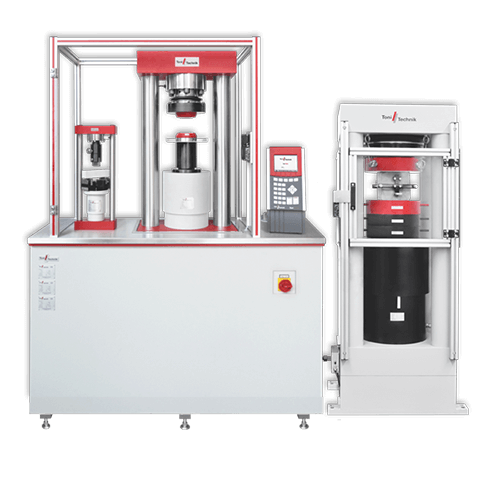
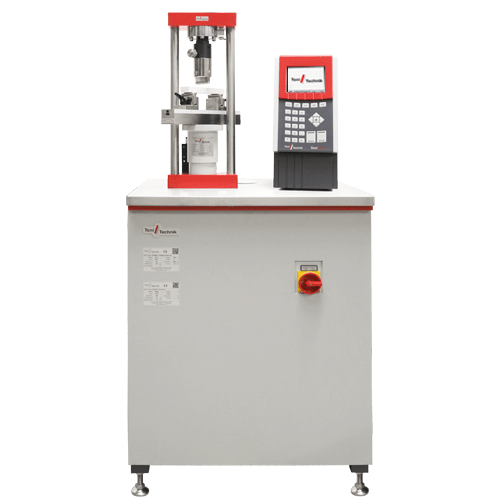
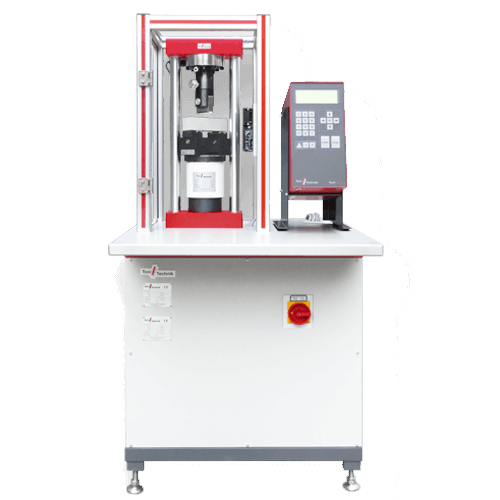
  • Combined test plant for the standard-compliant testing of the compressive and flexural strength of cement and other binding materials, preferably for efficient routine tests of:

    • Prisms 40 x 40 x 160 mm accord. to EN 196 / ISO 679
    • Cubes 50 mm (2 inch)  according to ASTM C109
    • Cubes 70.7 mm according to BS 1881
     

    Key benefits for the user:

    • connection possibility for a third load frame, e.g. 3000 kN compression test frame for concrete testing
    • possibility of machine control and test evaluation via a PC using testXpert software
    • future-proof through retrofittable software modules
    • possibility to connect to Laboratory Information and Management Systems (LIMS)
     
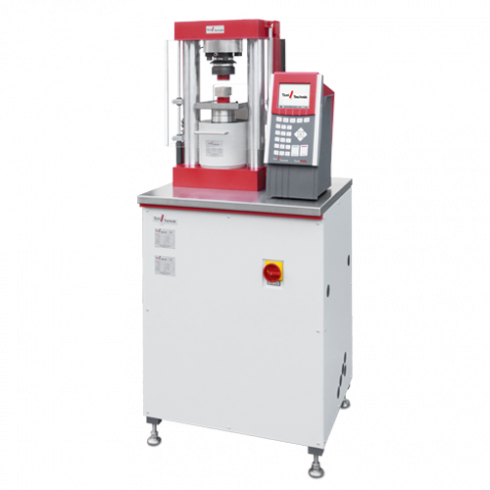
  • Test plant in compact design for efficient, standard-compliant compressive strength tests on cement and other binding materials, preferably on:

    • delivery as a ready-to-use, space-saving compact unit: "Set up, connect, test".
    • very easy programming and operation
    • possibility to connect to Laboratory Information and Management Systems (LIMS)
    • future-proof through retrofittable software options
    • US-units selectable (lbs, psi, inch,…)
     
  • Application For determining the Young's modulus on concrete cylinders, drill cores and prisms. For recording the mean change in length at two lateral lines of the specimen.  
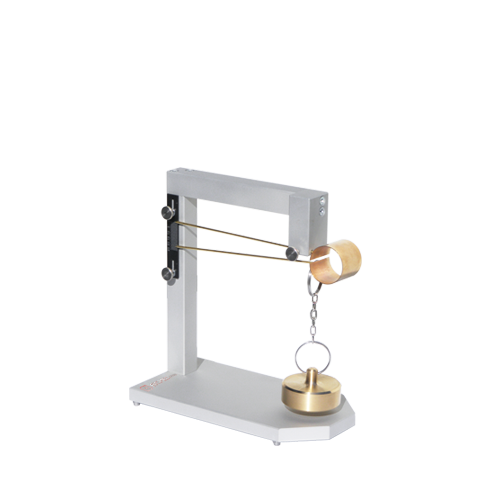
  • Device for the standard-compliant testing of the expansion of Le Chatelier moulds without permanent deformation (resilience) according to EN 196-3. The device consists of a solid base plate onto that a stand is mounted. The stand has a clamping device to clamp the Le Chatelier moulds and has an adjustable scale to measure the expansion of the mould. A weight and a key ring chain with a total mass of 300 g are part of the delivery.   Key benefits for the user: ✓ Adjustable scale for the adaption to the indicator needles ✓ Easy, user-friendly handling ✓ Solid design made of aluminum
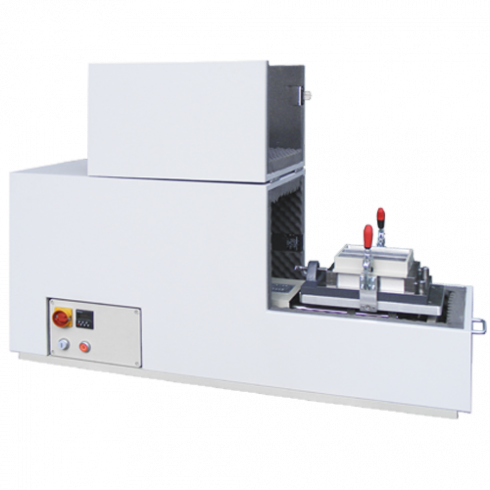
  • Compact, fully automatic test plant for standard-compliant flexural strength tests on cement and other binding materials, preferably on prisms 40 x 40 x 160 mm in accordance with EN 196 and ISO 679.
    • Accuracy:   Quality Class 1 / EN ISO 7500-1 / DIN 51220
    • Sizes:         10 kN / 20 kN / 50 kN
       
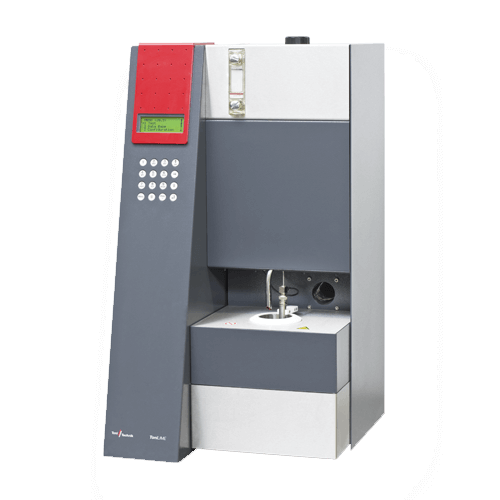
  • The analyzer TonLIME is designed to determine the content of free, uncombined lime in cement and cement clinker.

    The operating principle is based on the measurement of the electric conductivity in a solution consisting of cement and hot glycol in comparison with a stored calibration curve.

    Key factors for the user:

    • Measurement result in less than 10 minutes, very short preparation time for the user
    • no operator intervention required during the test procedure
    • Connection to a PC for parameterization and evaluation of the results via the RS 232 and RS 485 interfaces is also possible
    • integrated database with all necessary test parameters and intelligent menu navigation
  •  

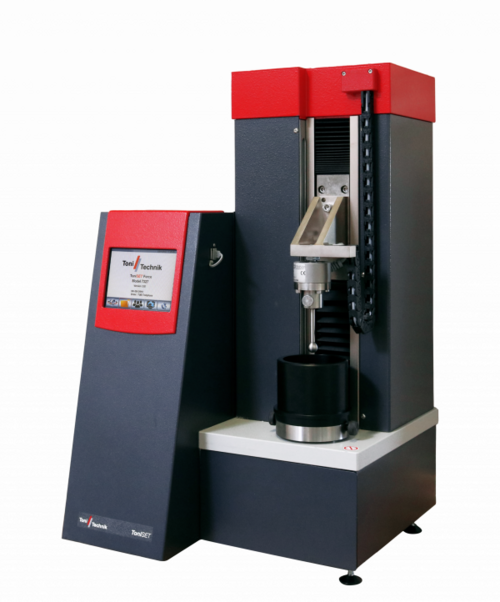
    The ToniFORCE is a fully automatic penetrometer for recording the setting behaviour of building materials like 3D printing concrete, cement, gypsum or mortar. The recorded data allow the determination of both the setting behaviour and the penetration resistance.


    Key benefits for the user:

    • Accurate electronic measurement of the penetration depth
    • Measurement of the penetration force (by precision force transducer based on strain gauges)
    • Fully automatic test execution
    • Stand-alone operation (no PC needed)
    • Ambient temperature recording
    • Test protocol in PDF format
    • Connectivity to "Laboratory Information Management System" (LIMS) via integrated LAN interface
  • The jolting apparatus is designed for the standard-compliant compaction of cement mortar and other binding material in moulds and meets the entire requirements of the standards EN 196 part 1 and ISO 679.   Key benefits for the user: ✓ Extremely sturdy, durable construction ✓ Solid, deformation-resistant table ✓ Clamping of the mold by quick clamping elements ✓ Comfortable one-button operation ✓ On demand delivery with foundation set or pre-casted concrete foundation ✓ Modification of the clamping device for moulds of other manufacturers is possible ✓ Sound protection hood for the reduction of the acoustic emission and for the protection of the user available
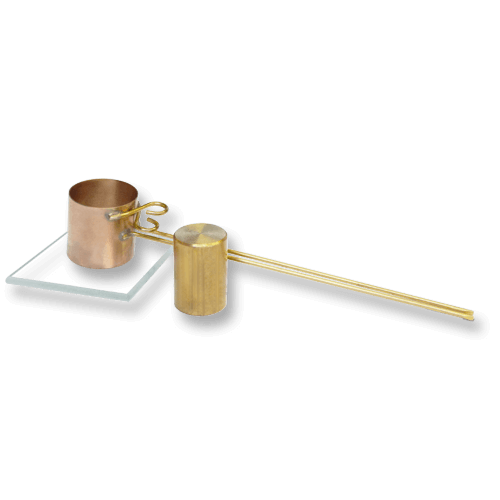
  • Application For the determination of the volume consistency of cement in accordance with DIN EN 196-3.   Design The ring consists of a fexible sheet body, made of copper-zinc alloy, with two measuring needles.   Working Principle The slightly oiled ring is placed onto a glass plate, manually filled with standard compliant cement paste and covered with a second glass plate on which a weight of approx. 50 grams is placed. Then the ring is exposed to a standard climate. After the setting of the cement paste the spread of the ring is measured at the end of  the measuring needles.
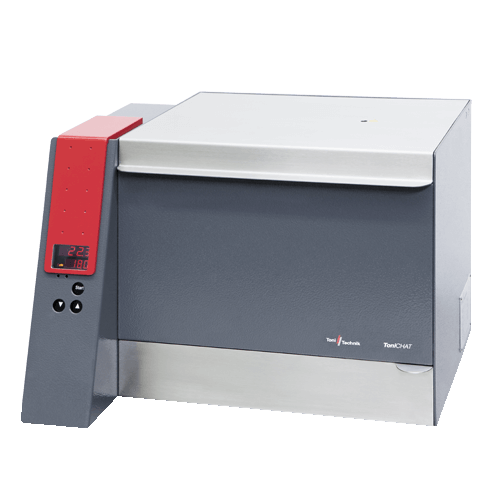
  • The Water Bath ToniCHAT allows the standard-compliant, controlled boiling of binding agent samples (i.e. Le Chatelier moulds) for the determination of the volume stability or rate of risk regarding a subsequent extension of the binding agent (cement) caused by hydration. The ToniCHAT corresponds exactly to the requirements of the standard EN 196-3 and performs an autonomous and controlled test cycle.   Key benefits for the user: ✓ Permanent indication of target / actual temperature ✓ Temperature control with an exactitude of 0.1°C ✓ Capacity for up to 16 Le Chatelier Rings ✓ Test execution optionally under water or steam ✓ Fully automatic test cycles according to defined parameters ✓ Controlled test procedure for accurate reproducible test results ✓ Integrated drain hose for an easy and fast water change ✓ Heating up from  20°C to 100°C within 30±5 minutes ✓ Stabilization of boiling temperature for three hours
  • Load frame for efficient, standard-compliant flexural strength tests on mortar prisms, preferably on prisms 40x40x160 mm in accordance with EN 196 and ISO 679.
    • Accuracy: Quality Class 1 / EN ISO 7500-1 / DIN 51220
    • Sizes: 10 kN / 20 kN / 50 kN
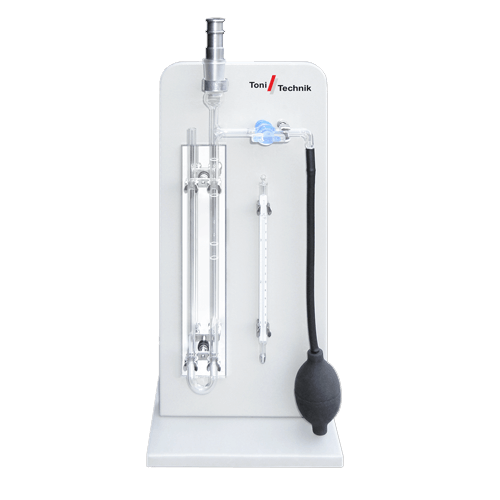
  • Manual air permeability tester according to Blaine for the determination of the specific surface (grinding fineness / Blaine value) of cement and other powdered materials in accordance with EN 196 and ASTM C 204.   Design Lacquered steel sheet stand with mounted U-tube manometer. The manometer is equipped with a conical seat for the measuring cell and level marks for the manometer fluid. The measuring cell is made of stainless steel and fits exactly to the conical seat of the U-tube manometer. Behind the manometer a mirror is mounted to avoid reading errors. To record the ambient temperature a thermometer is installed on the instrument.
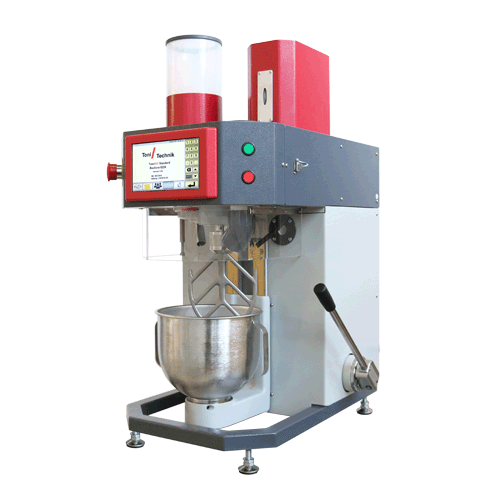
  • Automatic mixing of cement, mortar, gypsum and other materials including automated sand and water addition. Standard-compliant operation according to EN 196-1, EN 196-3, EN 480-1, ASTM C305, ASTM C359, ASTM C451, ISO 679 and other standards.

    Key benefits for the user:

    • High standard of work safety due to access protection, splash guard and interlocks*
    • Simple operation
      • Intuitive operation
      • Plug & Play: immediately ready for use
    • Downward compatible tools: continue to use your existing stirrers and keys of the ToniMIX type
    • Standard-compliant mixing processes according to EN, ISO, ASTM** including water dosing

    * Start of the mixer only possible with inserted key

    ** DIN EN 196 Teil 1, ISO 679, DIN 1164, ASTM C

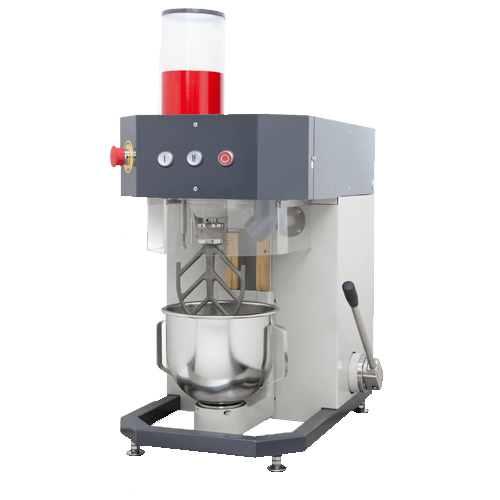
  • Application Mortar mixer for the standard-compliant preparation of cement mortar and cement paste according to EN 196, ISO 679, DIN 1164, ASTM C 305, Ö-Norm B 3310 and further standards.   Key benefits for the user:
    • robust, durable housing
    • wear-resistant, precise stirring tool
    • possibility of adding granular and liquid aggregates during the mixing procedure
    • integrated connection for dust exhaust
Go to Top